


Ralph M. Steinman
The Rockefeller University
For the discovery of dendritic cells — the preeminent component of the immune system that initiates and regulates the body’s response to foreign antigens.
The 2007 Albert Lasker Award for Basic Medical Research honors the scientist who discovered dendritic cells, the preeminent component of the immune system that initiates and regulates the body’s response to foreign antigens. At a time when conventional wisdom pointed in other directions, Ralph Steinman proposed that these cells propel other immune cells into action and then pursued that possibility with careful and dedicated experimentation. He revolutionized our understanding of the events that instigate an immune response and unlocked the entire field of T-cell activation.
In the last 34 years, Steinman’s work has revealed that dendritic cells scour the environment for microbial invaders and stimulate the T cells of the immune system to respond. These T cells, in turn, prompt other immune cells to eliminate the threat. Steinman devised techniques that generate large numbers of dendritic cells, which fueled a research boom in this area. His work spawned a major discipline, with hundreds of investigators worldwide studying these cells and their roles in multiple aspects of immune regulation.
Branching out in the immune system
Since the dawn of immunology, at the end of the 19th century, scientists have grappled with the question of how vertebrates respond to the tremendous array of pathogens that they encounter. In the 1950s, immunologists proposed that immune cells use receptor molecules on their external surfaces to recognize invading germs and other foreign particles, or antigens. Each receptor differs slightly from the next and can ‘see’ a different antigen. Vast numbers of immune cells exist in the body prior to any infection; together, they detect all antigens that an organism meets. Once an antigen contacts its receptor, the associated immune cell multiplies to create an army that rises up to attack that specific antigen.
By 1970, when Steinman began his work, this ‘clonal selection’ theory was well accepted. Scientists had discovered that lymphocytes, a group of cells in the blood and other immune-related tissues, play key roles in fighting microbial trespassers. For example, B cells produce antibodies, which attach to bacteria and mark them for destruction by other components of the immune system. T cells perform numerous tasks: Some types kill virus- and bacteria-infected cells, whereas others incite B cells to manufacture antibody.
To better understand lymphocytes’ functions and interactions, researchers wanted to re-create aspects of the immune response in culture dishes. When they attempted to do so, they encountered a mystery: Adding antigens to lymphocytes in culture dishes did not trigger the cells’ duplication. Apparently, something in the body that stimulated lymphocytes to respond to antigen was absent from the culture dish. Steinman set out to find the missing piece.
This issue lay at the center of immunological study at the time. Scientists speculated that lymphocytes could detect foreign agents only if an unidentified ‘accessory’ cell displayed the microbe’s antigens on its surface. Macrophages, which engulf and digest cellular debris and pathogens, seemed like strong contenders for this job. B cells and T cells also were candidates. However, convincing evidence remained elusive. For example, if macrophages could activate T cells, the more macrophages a sample contained, the more powerful should be its stimulating power; but the abundance of macrophages did not correlate with T-cell-activating capacity.
Working with the late Zanvil Cohn at the Rockefeller University, Steinman harvested a cellular mixture from mouse spleen that was known to spur T cells to divide in culture dishes. When he peered through the microscope at his spleen-derived substance, he noticed not only macrophages and other established immune cells, but rare, irregularly shaped cells that no one had described before. They moved in a distinctive way: Long projections emerged and floated around before retracting, giving the cells a dynamic star-like appearance. This branching behavior inspired Steinman to dub them dendritic cells, derived from the Greek word for tree. The cells differed from other immune cells in structure and behavior. For example, their surfaces didn’t carry molecules that typify macrophages, and they poorly internalized material from their environment. Unlike macrophages, they detached from plastic and glass culture dishes after growing overnight in the lab. Steinman proposed that this newly described cell performs a distinct physiological chore.
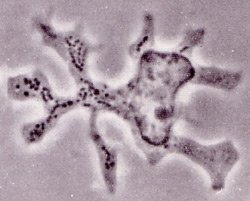
Ready for action. A dendritic cell initiates the immune response by using its long protrusions to present antigen to passing T cells. [Reproduced from The Journal of Experimental Medicine 1973;137:1142-1162. Copyright 1973 The Rockefeller University Press.]
A shot in the arm for T cells
By 1978, Steinman had exploited the properties that distinguish T cells, B cells, macrophages, and dendritic cells from one another to separate the spleen mixture into its components. Then he — with his trainees, who included Margaret Witmer, Michel Nussenzweig, Wesley van Voorhis, and Kayo Inaba — added back each cell type individually to lymphocytes in culture dishes.
Tiny quantities of dendritic cells incited T cells to reproduce and kill host cells that bore foreign antigen. Dendritic cells’ stimulatory power was more than 100-fold greater than that of B cells, T cells, or macrophages. As few as 0.5 dendritic cells per 100 T cells generated maximum proliferation. No one had anticipated that any cell could so efficiently goad T cells into action.
In 1985, Steinman tested whether this property depended on a long-term association between T cells and dendritic cells. He mixed T cells with antigen and dendritic cells. Then he isolated the T cells and added them to B cells, which multiplied and produced antibody in response. This experiment showed that the dendritic cells stably altered the T cells, triggering them to mature in such a way that they could stimulate B cells, even after the dendritic cells had disappeared.
The work thus far indicated that dendritic cells could activate T cells in culture dishes. But Steinman wanted to make sure that he was studying a phenomenon — priming of the immune system — that occurred in an intact animal’s body. He exposed dendritic cells to antigen in culture; then he washed away free antigen and injected the dendritic cells into mice. The animals mounted a strong immune response, converting naïve T cells into ones that reacted strongly to antigen. This observation and others showed that dendritic cells with pre-loaded antigen were sufficient to elicit an immune reaction in animals. Analysis of cell-surface molecules revealed that the T cells produced by the mice were stimulated by the injected cells rather than by dendritic cells that had previously resided in the animals. Thus, researchers could sensitize T cells of an animal to an antigen of choice by inoculating with dendritic cells that had been exposed to that antigen; Steinman pointed out that this prospect holds extraordinary therapeutic implications, an idea that investigators are pursuing today.
The two faces of dendritic cells
These observations and others also highlighted a feature of dendritic cells that conflicted with an originally described characteristic — the inability to take up particles from their surroundings. To present antigens to T cells, dendritic cells had to overcome this apparent limitation, a property that initially distinguished them from macrophages. In a separate line of studies, Steinman had begun to solve this conundrum. He discovered that so-called Langerhans cells, which had been identified in 1868, served as dendritic-cell precursors. This and other work led him to propose a scenario for dendritic-cell specialization in the 1990s. After capturing antigen, immature cells from the skin and elsewhere begin to display it on their surfaces. In the presence of stimulatory factors from the environment and other immune cells, they develop into dendritic cells. During this process, dendritic cells lose the capacity to ingest foreign agents. The dendritic cells that sensitize T cells — and the ones Steinman originally characterized — can no longer slurp antigen.
Maturing dendritic cells migrate from tissues such as skin to the lymph nodes, where the body ratchets up immune activities in response to specific invaders. In the mid 1980s, Steinman had noticed dendritic cells at the exact sites in the lymph nodes where T cells percolate through, awaiting instructions about whether their services are needed; dendritic cells thus reside in the ideal location for initiating immunity. A dendritic cell’s long extensions constantly probe the parade of T cells until they contact their target: a T cell whose antigen ‘matches’ that on the dendritic cell’s surface.
Tumors, trespassers, and tolerance
By the end of the 1980s, dozens of labs were studying dendritic cells — but investigations were hampered by scant supplies. Only about 1 percent of mouse spleen cells are dendritic cells. In the early 1990s, Steinman’s group and several others devised ways to prepare large amounts of dendritic cells. This breakthrough made the cells widely accessible, and the field exploded. Scientists have expanded their studies along multiple avenues and are now delving into potential therapeutic uses of dendritic cells.
The capacity to load antigens onto dendritic cells that then prime T cells in an animal raised the possibility of using dendritic cells to fight cancer. In one version of this scheme, tumor cells are removed from an individual and delivered to dendritic cells from the same person in culture dishes. The dendritic cells are then injected back into the patient’s body. This procedure should boost the immune system with cells whose primary mission is to attack that particular person’s tumor. Preliminary results are promising: The method shrinks tumors in experimental animals. The approach holds strong appeal because the dendritic cells strike multiple tumor components simultaneously; in contrast, drugs tend to focus on one cancer-related pathway at a time. Dozens of clinical studies are under way and the area is ripe for development, due in large part to Steinman’s experimental work and advocacy.
Scientists are exploring similar strategies to create dendritic cell-based vaccines against pathogens. Initial observations suggest that such a tactic might thwart HIV infections. This line of investigation could prove especially fruitful, as HIV is particularly insidious with regard to dendritic cells. Steinman demonstrated that dendritic cells provide a safe haven for replicating HIV-1 and can transmit the virus to T cells. Thus, in the natural setting, dendritic cells help spread HIV-1 rather than quash it.
The importance of dendritic cells extends beyond their capacity to initiate an immune response. They help induce tolerance, the process by which animals learn to ignore their own cells. Scientists might therefore adapt dendritic cells for clinical use in autoimmunity, allergy, and transplantation medicine. These dual roles — of immune stimulation and silencing — bolster dendritic cells’ standing as a central modulator of the immune response.
The conceptual framework and practical methodologies that Steinman pioneered not only cracked open the early steps of immune activation, but unveiled mechanisms by which our bodies tune their assaults against particular microbes. Scientists now know that dendritic cells adjust the immune reaction by rousing different classes of T cells, depending on the specific signaling molecules that are carried by other cells and the environment. Steinman’s work launched an entire field. He defined the basic biology of dendritic cells and formulated the therapeutic applications of his discoveries.
by Evelyn Strauss
Key publications of Ralph Steinman
Steinman, R.M. and Cohn, Z.A. (1973). Identification of a novel cell type in peripheral lymphoid organs of mice. J. Exp. Med. 137, 1142–1162.
Nussenzweig, M.C., Steinman, R.M., Gutchinov, B., and Cohn, Z.A. (1980). Dendritic cells are accessory cells for the development of anti-trinotrophenyl cytotoxic T lymphocytes. J. Exp. Med. 152, 1070–1084.
Inaba, K. and Steinman, R.M. (1985). Protein-specific helper T-cell formation initiated by dendritic cells. Science. 229, 475–479.
Schuler, G. and Steinman, R.M. (1985). Murine epidermal Langerhans cells mature into potent immunostimulatory dendritic cells in vitro. J. Exp. Med. 161, 526–546.
Inaba, K., Metlay, J.P., Crowley, M.T., and Steinman, R.M. (1990). Dendritic cells pulsed with protein antigens in vitro can prime antigen-specific, MHC-restricted T cells in situ. J. Exp. Med. 172, 631–640.
Pope, M., Betjes, M.G.H., Romani, Hirdman, H., Cameron, P.U., Hoffman, L., Gezelter, S., Schuler, G., and Steinman, R.M. (1994). Conjugates of dendritic cells and memory T lymphocytes from skin facilitate productive infection with HIV-1. Cell. 78, 389–398.
Banchereau, J. and Steinman, R.M. (1998). Dendritic cells and the control of immunity. Nature. 392, 245–252.
Steinman, R.M. and Banchereau, J. (2007). Taking dendritic cells into medicine. Nature. In Press.
Award presentation by Joseph Goldstein
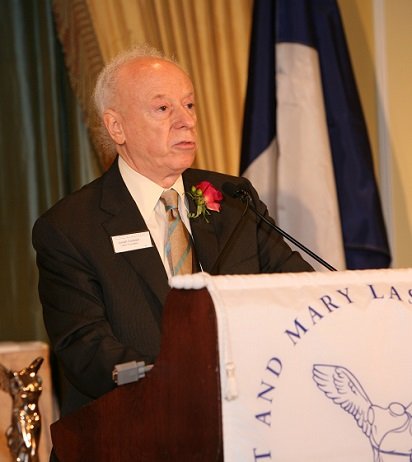
Award presentation by Joseph Goldstein
We live in a dangerous world, surrounded and threatened by two types of foreign invaders — one political and the other microbial. Protection against these invaders depends on the efficient operation of two different systems of defense — one dedicated to our nation’s security and the other to our body’s immunity. As I discuss the work of this year’s Lasker Basic Award winner, you’ll see that the immune system shares many features with the government’s security system, albeit with notable differences in their effectiveness.
Our national security is organized around a two-tier operation — the CIA and the FBI. In a perfect world, these two agencies would interact and cooperate. The CIA’s mission would be to identify potential enemies, gather information on them, and analyze the intelligence for presentation to the second tier, the FBI. The FBI would receive the CIA’s intelligence, act on it, and eliminate the foreign invaders before any damage is done. But, unfortunately, we don’t live in the fictional world of movies and novels, and the CIA and FBI more often than not fail to connect the dots.
Acceptance remarks by Ralph M. Steinman
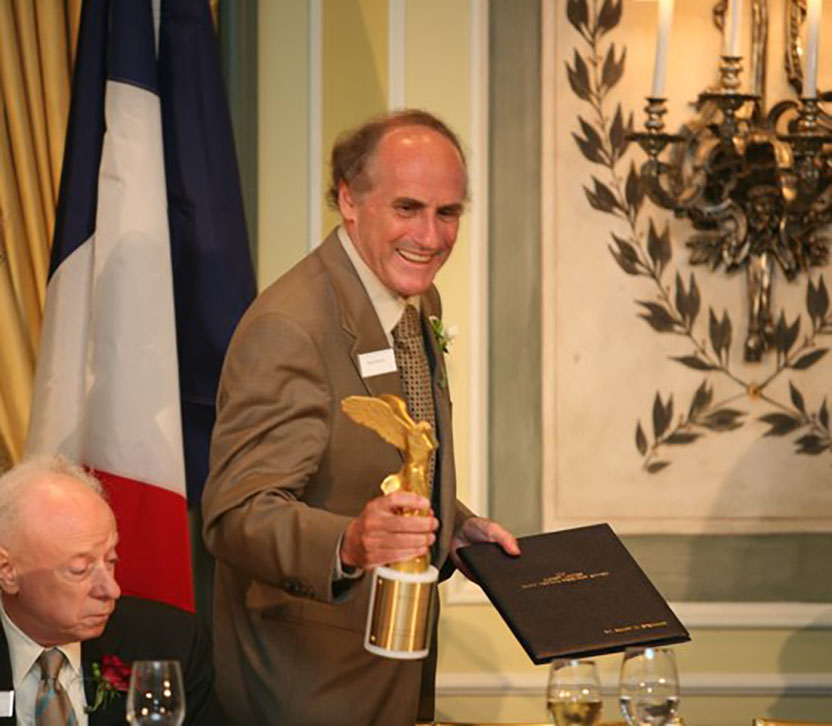
Acceptance remarks, 2007 Lasker Awards Ceremony
It is exhilarating to be recognized for a Lasker Award and to listen to Joe Goldstein’s exceptional summary. I am so excited that I am actually feeling dendritic, wanting to embrace the members of the jury and all my friends and family who are here today.
I became interested in immunology late in medical school, inspired by leaders like MacFarlane Burnet, Peter Medawar, and Zanvil Cohn. I wanted to know how immunity begins, a basic problem so little understood yet so relevant to many diseases. This question led to the discovery of dendritic cells and to a commitment to figure out how these cells work.
Of course, scientists are always focused on the future, and now I realize that to move forward, we need more people like Mary Lasker and Tony Fauci. One reason that I say this is because we need to mobilize support for the kind of research in patients that leads to discovery. The patient often sets the standard for what we still need to know. Let me sketch three examples where research in patients on dendritic cells should make a difference.
