

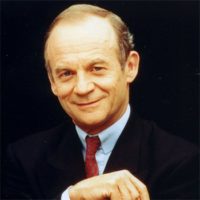
Alain Carpentier
Hôpital Europeen Georges Pompidou
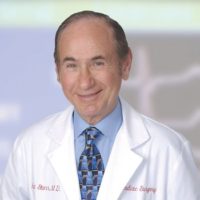
Albert Starr
Providence Health and Services
For the development of prosthetic mitral and aortic valves, which have prolonged and enhanced the lives of millions of people with heart disease.
The 2007 Albert Lasker Award for Clinical Medical Research honors two surgeon-scientists who revolutionized the treatment of heart disease. Albert Starr and his engineer partner, the late Lowell Edwards, invented the world’s first successful artificial heart valve. This device has transformed life for people with serious valve disease, providing a remedy where none previously existed. Alain Carpentier then circumvented the predominant limitation of mechanical valves — a propensity to clot within blood vessels and the associated need to take blood thinners — by adapting animal valves for use in humans. In the embryonic days of open-heart surgery, Starr and Carpentier opened up the entire field of valve replacement. Their work has restored health and longevity to millions of individuals with heart disease.
Starr’s and Carpentier’s contributions extend beyond these landmark innovations. In an era before the US Food and Drug Administration (FDA) regulated medical devices, Starr set up the infrastructure for conducting clinical trials on his valves, including an informed-consent procedure and long-term patient tracking. This practice allowed him to evaluate valve-replacement outcomes and seek solutions to clinical problems. Furthermore, his surgical patients required a new type of postoperative care. To deliver it, he assembled a multidisciplinary healthcare team, creating what corresponds to today’s cardiac intensive care unit. Carpentier, in turn, augmented his own initial discovery by formulating techniques to repair rather than replace valves — a venture that was aided by the availability of prosthetic valves as a backup. He continues to probe the suboptimal areas of heart-valve surgery, relentlessly pursuing superior strategies.
Heart of darkness
In the 1950s, when Starr trained as a surgical resident and intern, complications from rheumatic fever loomed large. Inflammation from this disease can thicken and narrow the heart valves — tissue flaps that open and allow blood to flow through the organ and then close to prevent leakage back. Other conditions, too — for example, congenital problems and degenerative processes — constricted valves or made them leak. Surgeons sometimes could blindly use a finger through an incision in the chest to widen the valve opening, but if that procedure didn’t work, no alternative existed. Many patients remained incapacitated or died. The world desperately needed a way to replace flawed valves.
Charles Hufnagel, of the Georgetown Medical Center in Washington, DC, took a step toward addressing this challenge in 1952 by implanting an artificial valve in a patient’s aorta, a site that normally does not contain a valve. The surgeon was trying to alleviate problems associated with the patient’s aortic valve, which was allowing blood to trickle backward into the heart. The procedure helped this individual and others, but the operation did not constitute a true valve replacement because Hufnagel was adding rather than replacing a valve. Hufnagel’s achievement, however, demonstrated that a device in the circulation can force blood to flow in one direction only and the feat unlocked the possibility of placing mechanical valves in humans.
Heart-to-heart conversation
In 1958, recently retired engineer Lowell Edwards visited Starr at his office of what is now called the Oregon Health & Science University in Portland. Edwards was a prolific innovator. He had filed 63 patents, mostly in the aviation and paper industries, and he had a strong background in hydraulics. The idea of mechanizing blood flow through the heart — a biological pump — captivated him. He proposed to Starr that they collaborate to build an artificial heart. Starr persuaded him that the project was too ambitious; the first order of business, Starr argued, was to develop a valve.
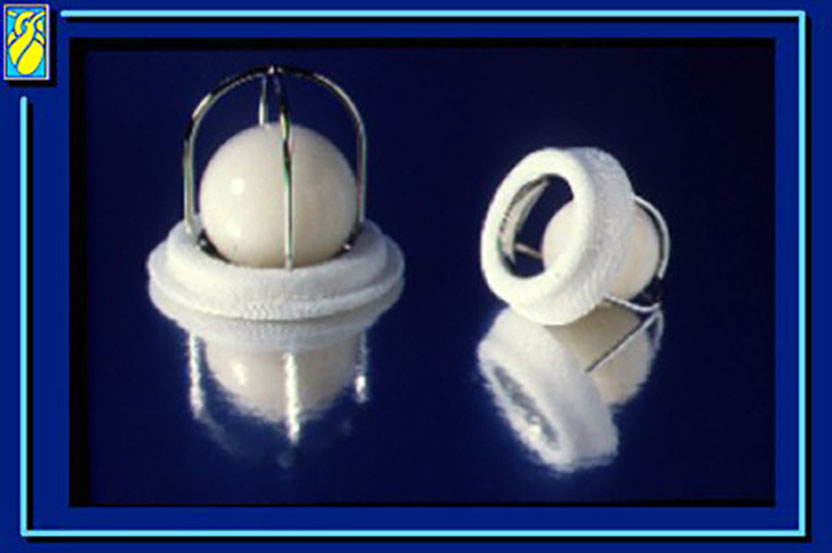
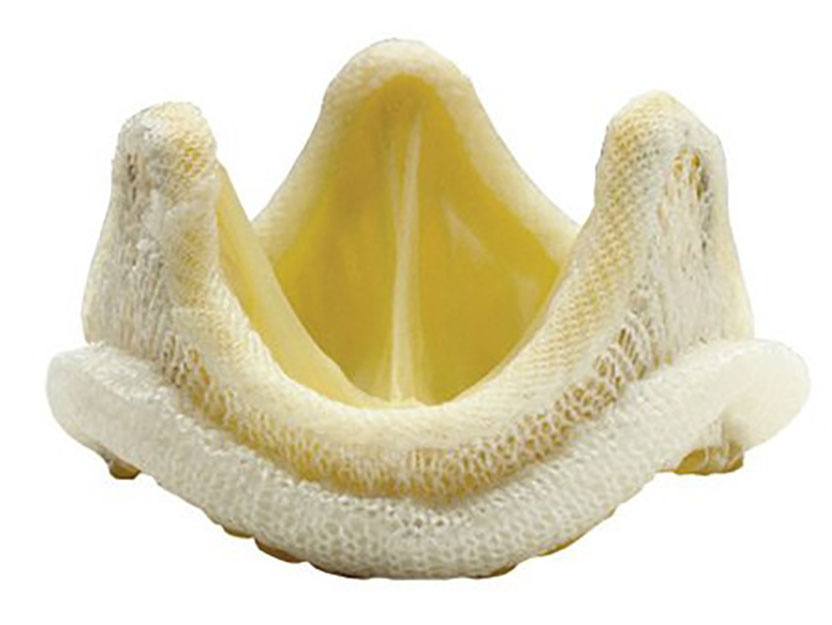
The beat goes on. The Starr-Edwards caged-ball valve (top) and a glutaraldehyde-treated pig valve (bottom) broke new ground in the treatment of heart disease. [Credit: courtesy of Albert Starr; courtesy of Edwards Lifesciences]
Tell-tale hearts
Starr used this apparatus to replace the mitral valve — a valve that separates two chambers of the heart — in dogs. These and subsequent experiments established that the devices could function briefly in animals, but they promoted lethal clot formation and tore tissue at the implantation site. Starr and Edwards disposed of the latter issue by cushioning the sewing ring. The first item posed more of a problem. Clots began at the spot where Starr had attached the device and crept inward until they obstructed the central orifice. The team decided to explore other designs.
They settled upon a valve composed of a free-floating ball inside a cage, which had been used since it was patented as a bottle stopper in 1858. The ball sits snugly in the sewing ring at the back of the cage. As pressure builds outside the device, it pushes the ball away from the opening and fluid flows. After the pressure drops, the ball moves back and re-forms a seal.
Several groups had attempted to place mechanical valves in humans before Starr and Edwards did, and some utilized this general valve-ball scheme. All of the gadgets failed, in large part because they induced clot formation. Most of the field was reaching consensus that the mitral valve required a mechanical substitute that copied nature — a leaflet design. Resisting this conventional wisdom, Starr and Edwards decided to choose function over form. They adopted the caged ball even though it looked nothing like a real heart valve. The almost constant motion of the ball would remove clots as they formed, the investigators reasoned, and Edwards’ concentrated engineering efforts could eventually surmount the challenges that the enterprise presented.
After several more rounds of experiments and design modifications, Starr had a kennel full of dogs that carried artificial mitral valves. The animals licked, barked, played, and generally behaved like healthy beasts. The incidence of clot-related complications plummeted and survival times lengthened.
Starr wanted to track the dogs and learn about long-term complications before implanting the device in humans. However, the Chief of Cardiology and the Chairman of the Department of Surgery at Portland pressured him to begin operating on people. Patients were dying and Starr had his hands on a potential therapy.
He decided to proceed, but numerous items that we take for granted today had to be put in place. No precedent existed for addressing liability issues, so Starr and Edwards developed the first informed consent procedure. Starr also had to build the equivalent of a cardiac intensive care unit to attend to the very sick patients who would emerge from the surgery.
A song in the heart
In September 1960, Starr performed the first successful valve-replacement operation on a person. This individual was the first human to live more than 3 months with a mitral valve replacement. He survived for 10 years after the implantation and died after falling from a ladder. By the end of February 1961, Starr had implanted six more valves. Patients’ cardiac functions improved dramatically and most of them survived for unprecedented amounts of time.
The FDA did not yet regulate devices, so its clinical trial system had not been applied to prostheses. By this time, Edwards had founded Edwards Laboratories, Inc. (now Edwards Lifesciences) to manufacture the valves and Starr became a consultant. Starr and Edwards decided to restrict sale of the valve to medical centers with extensive experience in open-heart surgery to guarantee quality control on the procedure. These institutions agreed to report back any adverse reactions they observed. Thus, Starr established the first clinical-research tracking system for long-term follow-up in patients carrying implanted medical gear.
Starr invited surgeons from all over the world to visit so he could teach them the procedure. The advance rippled through the United States, Europe, Japan, and then into South America, India, Thailand, and beyond. Less than a year after introducing the world’s first commercially available replacement mitral valve, Edwards and Starr unveiled its counterpart for the aortic valve; a tricuspid valve followed. Starr performed the first triple valve-replacement surgery in 1963. Over the years, Starr and Edwards tuned the design to improve function and durability; the lack of FDA oversight allowed them to move much more quickly than they could have today. The Starr-Edwards 1965 version is still in use; it operates as well as today’s most widely used artificial valve, the St. Jude Medical® mechanical heart valve.
Heart’s desire
Starr and Edward’s triumph was stupendous, but the approach held a significant drawback. Patients with synthetic valves must take blood thinners for the rest of their lives. These medications increase the risk of serious bleeding and they are particularly onerous for some groups of people, such as women of childbearing age. Furthermore, the blood thinners diminish, but don’t obliterate, the risk of clot formation.
In 1964, Alain Carpentier, who was doing his surgical residency at Hôpital Broussais in Paris, treated an artist whose fate influenced that of cardiac surgery. Carpentier and his colleagues had used a Starr-Edwards valve to save this patient’s life, but a few weeks after the operation, a clot formed on the device, broke off, and lodged in his brain. Paralyzed, this man could no longer paint. Carpentier realized that the surgical team had saved the artist’s life, but profoundly compromised it. He pledged to devote himself to solving the problem of clotting that results from valve surgery.
In contrast to synthetic substances such as metal and silicone rubber, tissue does not trigger clot formation. Carpentier began working with valves from cadavers, an endeavor that others had begun to explore. However, French law forbade doctors from harvesting organs until 48 hours after death. As a result, bacteria contaminated many valves by the time surgeons could use them. Moreover, limited availability of valves from cadavers restricted their potential utility.
So Carpentier decided to adapt animal valves for use in people. He began exploring tactics to sterilize and preserve pig valves. Having trained earlier with Robert Judet, inventor of the artificial hip, Carpentier knew that a mercurial solution served those purposes for human skin employed in joint-reconstruction operations. He decided to try that approach.
In September 1965, Carpentier and Jean-Paul Binet performed the first successful replacement of a human valve with an animal valve at Hôpital Broussais. Results from this patient and others in the first several groups initially appeared promising. However, the mercury-treated valves began deteriorating within two years of implantation, in part because harmful inflammatory cells infiltrated the replacement tissue and compromised its integrity. Carpentier minimized this problem by inserting a physical barrier — Teflon cloth — at the graft-host interface. However, major hurdles remained. He wanted to devise a method that would strengthen the tissue as well as render it immunologically inert. Aspiring to bolster his fundamental knowledge of biochemistry, he enrolled in a PhD program at the University of Paris.
Heartening results
Eventually Carpentier found that a compound called glutaraldehyde sterilizes tissue, reduces its immunogenicity, and links collagen molecules with one another, thus increasing durability. Glutaraldehyde outperformed all other substances tested in decreasing immunoreactivity and increasing tissue stability.
In the meantime, Carpentier had begun to mount his tissue valves in Teflon-coated metallic frames with the hope that this practice would make the device as simple to insert as mechanical valves. The development minimized the complexity and time required for suturing, and it laid the groundwork for large-scale production. The synthetic material did not spur clot formation because it composed a non-moving portion of the apparatus: Cells grow over the valve housing, which slashes the risk of clot formation.
Carpentier coined the term bioprosthesis to describe this gadget, indicating its origin as well as its purpose. In March 1968, Carpentier and Charles Dubost implanted the first bioprosthesis. The patient survived for 18 years with that device.
Carpentier’s achievement impressed Starr, who introduced Carpentier to Edwards. This act was particularly remarkable, given that Carpentier’s valve might compromise the success of Starr’s. Carpentier worked with Edwards’ laboratory to develop a commercial product composed of glutaraldehyde-treated pig valves, held in a frame for easy insertion. This collaboration produced standardized bioprosthetic valves of variable sizes that could be kept on the shelf. Other companies, too, began to manufacture this type of valve using Carpentier’s glutaraldehyde-based process, a technique that is still in use today.
Tissue valves boast important advantages over mechanical valves. The risk of clotting is lower; as a result, patients can avoid long-term treatment with blood thinners. Furthermore, the nature of the occasional valve failure is progressive and thus allows time for re-operation. In addition to these benefits, the bioprosthesis incorporates the power of prosthetic valves: availability, standardization, and ease of implantation.
Carpentier’s achievements did not stop with the tissue valve. He developed a surgical treatment, sometimes called the “French correction,” intended to avoid a prosthesis altogether. With this improvement, he repaired rather than replaced valves. His key innovation was the Carpentier-Edwards ring. This apparatus stabilizes and reshapes the structure that holds the valve, thus improving its function; thus, many patients can keep their own valves. After a short period, tissue grows over the ring, incorporating it into the body. Similar to Carpentier’s bioprosthesis, the ring does not require use of blood thinners. This advance sparked the development of many valve-repair strategies and ushered in the modern era of valve reconstruction.
The tale of heart-valve surgery is still unfolding and significant challenges remain. In particular, the durability of bioprostheses correlates roughly with the age of the person carrying them. The devices tend to calcify and eventually break down, especially in young people. Clinician-scientists, including Carpentier, are tackling these problems. Future chapters will likely echo the themes of success so clearly articulated by Starr and Carpentier in the early chapters of this story.
by Evelyn Strauss
Key publications of Alain Carpentier
Binet, J.P., Carpentier, A., Langlois, J., Duran, C., and Colvez, P. (1965).Implantation de valves hétéogènes dans le traitement des cardiopathies aortiques. C. R. Acad. Sc. Paris 261, 5733–5734.
Carpentier, A., Lemaigre, G., Robert, L., Carpentier, S., and Dubost, C. (1969). Biological factors affecting long-term results of valvular heterografts. J. Thorac. Cardiovasc. Surg. 58, 467–583.
Carpentier, A. (1989). From valvular xenograft to valvular bioprosthesis: 1965–1970. Ann. Thorac. Surg. 48, S73–S74.
Carpentier, A., Deloche, A., Relland, J., Fabiani, J.N., Forman, J., Camilleri, J.P., Soyer, R., and Dubost, C. (1974). Six-year follow-up of glutaraldehyde-preserved heterografts. J. Thorac. Cardiovasc. Surg. 68, 771–782.
Carpentier, A. (1983). Cardiac-valve surgery — the French connection. J. Thorac. Cardiovasc. Surg. 86, 323–337.
Deloche, A., Jebara, V.A., Relland, J.Y.M., Chauvaud, S., Fabiani, J.N., Perier, P., Dreyfus, G., Mihaileanu, S., and Carpentier, A. (1990). Valve repair with Carpentier techniques — the 2nd decade. J. Thorac. Cardiovasc. Surg. 99, 990–1002.
Key publications of Albert Starr
Starr, A. (1960). Total mitral valve replacement: Fixation and thrombosis. Surg. Forum, American College of Surgeons 11, 258–260.
Starr A. and Edwards, M.L. (1961). Mitral replacement: The shielded ball valve prosthesis. J. Thorac. Cardiovascular Surg. 42, 673–682.
Starr A. and Edwards, M.L. (1961). Mitral replacement: Clinical experience with a ball valve prosthesis. Ann. Surg. 154, 726–740.
Herr, R., Starr, A., McCord, C.W., and Wood, J.A. (1965). Special problems following valve replacement. Ann. Thorac. Surg. 1, 403–415.
Anderson, R.P., Bonchek, L.I., Grunkemeier, G.L., Lambert, L.E., and Starr, A. (1974). The analysis and presentation of surgical results by actuarial methods. J. Surg. Res. 16, 224–230.
Gao, G., Wu, Y.X., Grunkemeier, G.L., Furnary, A.P., and Starr, A. (2004), Forty-year survival with the Starr-Edwards heart valve prosthesis. J. Heart Valve Dis. 13, 91–96.
Award presentation by Michael Brown
If you’ve ever used a hand-held pump to inflate a bicycle tire, you know that pumps need two valves — one to permit air to enter on the intake stroke, and the other to permit air to exit during expulsion. Our hearts are no different. Each of the two pumping chambers has two valves — one for intake and one for expulsion. Heart valves are remarkably resilient. Over a human lifetime they open and close 3 billion times, allowing 50 million gallons of blood to pass. When they close, they prevent the backflow of this deluge. It’s no wonder that heart valves wear out. They can wear simply with age, or they can fail early in life as a result of birth defects, or diseases like rheumatic fever and bacterial infections. Disease can constrict the valve, blocking the flow of blood, or it can render the valve leaky, permitting devastating back-flow. Often a single valve can suffer both problems.
Acceptance remarks
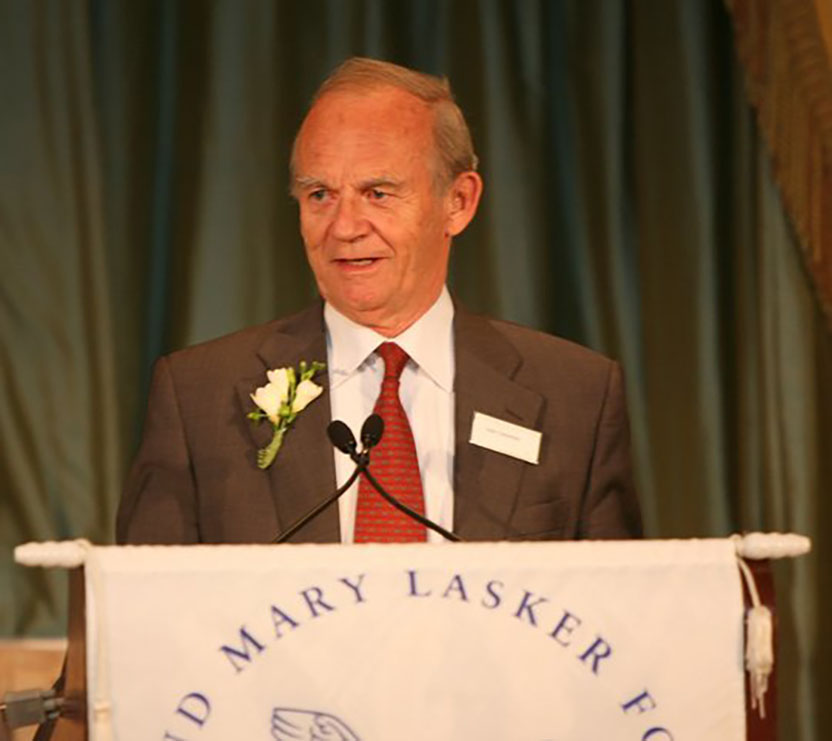
Acceptance remarks, 2007 Lasker Awards Ceremony
Progress in medicine is often triggered by emotional circumstances. As a resident in cardiac surgery in the early 1960s at the Hôpital Broussais in Paris, I was struck by an artist suffering from a valvular disease whose valve had been replaced by a valvular prosthesis. Three months after the operation, he presented with a severe brain damage due to the migration of a clot formed in the contact of the prosthesis. He couldn’t paint anymore. The same valve, which had saved his life, had now definitely impaired his quality of life. At this very moment, I decided to devote my research to this problem.
But how to start? Which direction to take? I knew that valves removed from human bodies and grafted to a patient did not produce clot formation. Unfortunately, this solution was complex in its implementation because of problems of procurement and infection. Valves retrieved from animals shouldn’t have these disadvantages. Unfortunately, pig valves implanted in sheep were destroyed in a few days or weeks by acute immunological response. Something had to be done to prevent it. This required a much better expertise in immunology and chemistry than the one I had acquired during my medical education.
Although I was already an active cardiac surgeon, I persuaded with difficulty my chief, Professor Dubost, that I should spend one or two days a week at the Faculty of Sciences. At the same time, I developed my own research laboratory, actually a single small room in the basement of a building of my faculty. Exploring all chemical techniques of tissue fixation, I was fortunate to discover that glutaraldehyde could reduce the immunological response enough for the valve not to be rejected.
In research, more challenging than an idea itself, application requires favorable circumstances and some luck. I was lucky in 1969 to receive the visit, in my laboratory in Paris, of the famous surgeon Albert Starr. He was so surprised by my results that he advised me to develop this new valve in collaboration with the laboratory which was already manufacturing his own prosthesis. Using the engineering capacities of Edwards laboratories, the glutaraldehyde-treated pig valve was mounted into a stent to facilitate its surgical implantation in a human. I called it “bioprosthesis” to refer to its biological origin and its prosthetic fate.
The first implantation of a valvular bioprosthesis took place in May 1968 in Paris during one of the most famous revolutions of students. The operation succeeded, the revolution faded. Several other successful operations followed with the advantage for the patients not to be obliged to take any blood thinner. A 25-year-old marathon runner wanted an additional advantage: “I want a bioprosthesis,” he told me, “but can’t you make it from antelope tissues?” — Why? — “Because antelopes run faster than pigs!”
The clinical results had been gratifying for six years when an unexpected complication emerged in patients younger than 60 years of age: tissue calcification that compromised long-term valve function. I returned to the lab and, with the help of my wife, Sophie, I improved the method of glutaraldehyde fixation by adding calcium-mitigating adjuncts. In the same time, I improved the valve design to minimize flow turbulence, an additional cause of calcification. These improvements almost doubled the durability of the bioprosthesis and extended the indications to younger patients. A lot of research work, however, remains to be done in order for this valve to be used in children. This is what I am doing now.
This prestigious award is the highlight of my career and a strong incentive to persevere, thus continuing to follow the St. Augustine’s motto, which has influenced my whole spiritual and scientific life: “Always search, and when you have found, search again.” Merci beaucoup to the Lasker Foundation and to its Jury.
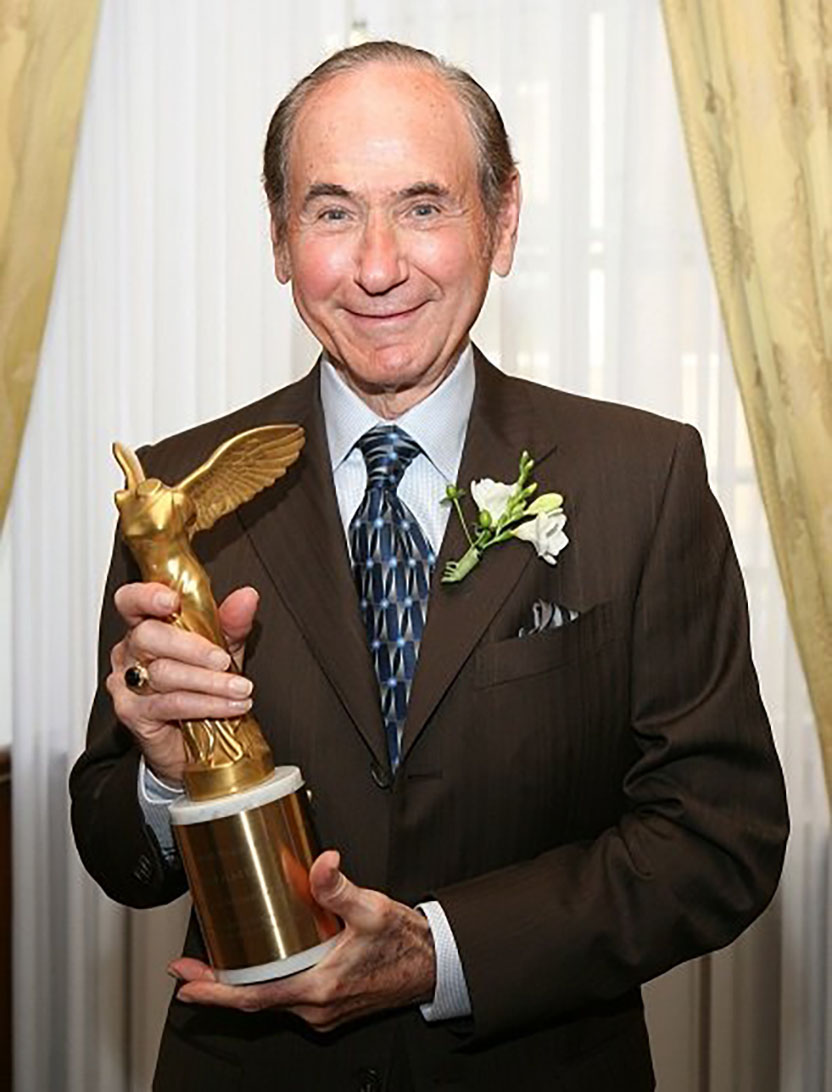
Acceptance remarks, 2007 Lasker Awards Ceremony
I feel honored to accept this prestigious award and recognition by the Lasker committee. This occasion brings to mind three stories about our work. The first concerns Lowell Edwards, my engineer partner; the second, a dilemma in going from animal to man; and the third, a call from a grateful patient 43 years later.
Edwards and I began work in 1958, and early on he was interested in obtaining a unit of human blood. I supplied it with some difficulty and wondered why he needed it. The next day I visited his laboratory in a wood shed at his home on the Sandy River and he had the blood in a device that I had never seen.
He was measuring its lubricity; the S.A.E. of blood! No one had ever done so to his knowledge, and this could be an important element in valve durability. This consideration would drive valve design so as not to extend the capabilities of blood as a lubricant. This was a stunning moment as I realized the importance of the interface between medicine and engineering. This interface would grow enormously in the next few years with multiple technology companies devoted to cardiac surgery. Edwards Laboratories, now Edwards Lifesciences, became the prototype for a massive industrial complex supporting medicine.
The second story involved the problem of animal to man in medical research. After implanting many valve types in dogs, all of which thrombosed in a few days, we eventually used a ball and cage device. Unfortunately, all animals died of valve thrombosis at about 30 days after implantation, except for one beautiful black Labrador retriever. We then developed a complex mechanism to shield the zone of implantation, with 80% long-term survivors beyond 6 months. As a result of the success of the shielded valve, we were urged by our chief of Cardiology in General Surgery to initiate clinical trials, but which valve should we use—the simple unshielded valve with our one survivor, or the shielded valve that was truly successful in the experimental animal? We chose the unshielded valve—it was the right choice, and successful in man. If we had chosen the complex shielded device, and if it was successful, how would we know if the unshielded and simpler device would also have been successful? On the other hand, if the unshielded valve failed, we could always move to the shielded valve. This decision was a good one and I owe a debt of gratitude to a beautiful dog who was adopted as a mascot by our laboratory team.
Finally, the third story involves a patient I operated on in Salonika, Greece, in 1964. The chest was opened, the patient was on bypass, her own destroyed valve was removed, and I asked the nurse for a 30-mm ball valve. The valves had been delivered to her in little plastic containers to be autoclaved. There was hesitation, then tears as she told me in broken English that the valves we brought to the operating room were destroyed in the autoclave. Apparently she had sterilized the valves in their little plastic bags, the plastic melted and was adherent to the valve. It looked as if the valve had melted. In fact, it was only the plastic bag, and it was possible to peel this off the device and implant it successfully. Two months ago on a visit to Athens, Greece, I got a thank you call from Salonika, and it was this patient who was alive and well with the same device 43 years later. As we spoke I had vivid recall of her operation. This was but one of hundreds of calls and letters received from grateful patients, providing much positive feedback for our work. Recognition by the Lasker Foundation has added a meaningful new dimension for what has been a very happy story.
