

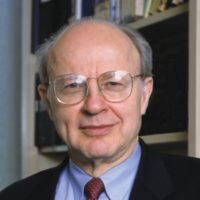
Robert Roeder
The Rockefeller University
For pioneering studies on eukaryotic RNA polymerases and the general transcriptional machinery, which opened gene expression in animal cells to biochemical analysis.
The 2003 Albert Lasker Award for Basic Medical Research honors a scientist who pioneered studies of the process by which nucleated cells copy DNA into RNA. This reaction — transcription — manufactures the template for protein production and thus determines which genetic information is retrieved, or expressed, at a particular time. As a result, it dictates a cell’s biochemical capabilities and underlies all physiological processes. Through his work on transcription, Robert Roeder opened up the study of gene expression in animal cells to biochemical analysis. This accomplishment triggered an explosion in the field that has generated enormous insight into the mechanisms by which multicellular organisms decode the genome.
All of an animal’s body cells carry the same genetic blueprint. Yet cells in different tissues perform radically different jobs because each contains proteins tailored to specific functions. Red blood cells, for example, funnel their resources into making hemoglobin, which carries oxygen from the lungs to the tissues, whereas pancreatic cells churn out insulin so the body can absorb glucose properly. In the mid-1960s, when Roeder began his graduate work, scientists knew that bacteria turned genes on and off in response to signals from the environment. They inferred that eukaryotes — organisms such as humans that encase their DNA in a cellular compartment called a nucleus — would similarly regulate protein production, but no one knew how. The machinery that transcribes DNA into RNA would lead to the answer, Roeder reasoned. He aimed to get his hands on the essential components of the reaction and, eventually, to reconstruct the process from its constituent parts. He hoped that the ability to faithfully reproduce eukaryotic transcription in a test tube would allow him and others to study exactly how the cell chooses which genes to express — and the molecular details by which that process occurs.
The enormous complexity of the eukaryotic transcription machinery furnishes the cell with many tunable steps and components. The ability to tweak the transcription reaction allows the cell to perform feats of sophisticated biology — activating particular constellations of genes at certain times during embryonic development, for example, or in response to chemical cues. Roeder’s work laid the groundwork for these insights and for our current knowledge about how eukaryotic transcription works.
Three’s a charm
By the time Roeder started his graduate work with William Rutter nearly 40 years ago, scientists suspected that bacteria carry a single enzyme, RNA polymerase, that makes protein-encoding RNAs as well as RNAs that perform other functions. Studies of RNA production in isolated nuclei, however, had hinted that the story might be different for eukaryotes.
As a first step toward obtaining protein mixtures that he could test for enzyme activity, Roeder isolated nuclei from sea urchin embryos, but then he faced a challenge. Unlike the bacterial RNA polymerase, which floats free, most of the eukaryotic RNA polymerase binds to DNA and its associated proteins. Stuck to such a large conglomeration, the enzyme (or enzymes) did not dissolve easily. Roeder used some clever biochemical tricks to keep polymerase activity in solution while leaving the DNA-protein amalgam in a clump. He then subjected the dissolved substances to a technique that separates molecules in the mixture from each other. With this approach, he generated many tiny pots of material, each with different collections of proteins from the next.
To test for the presence of RNA polymerase in his samples, he added a portion of each to a test tube containing a DNA template and RNA building blocks — one of which carried a radioactive tag. Any RNA polymerase in the material would presumably sit down on the DNA and link together the building blocks to create a long, radioactive RNA molecule whose sequence reflected that of the DNA. Three separate activities emerged from his samples, and he named them RNA polymerase I, RNA polymerase II, and RNA polymerase III (nicknamed Pol I, Pol II, and Pol III).
Roeder wondered whether these enzymes carried out specialized jobs, and by the time he joined the faculty at Washington University, he was in a position to find out. Other researchers had discovered a mushroom toxin called amanitin, which blocks RNA synthesis when injected into rats. Roeder used this poison to test whether the different polymerase activities perform distinct roles in the cell. In a test tube, tiny amounts of amanitin thwarted Pol II, whereas even large quantities did not perturb Pol I; Pol III’s vulnerability to the toxin lay in the middle. These different sensitivities offered the ability to distinguish the polymerase activities from each other in a setting where all of them were present.
Assuming that the test-tube findings would extend to isolated nuclei, the toxin should profoundly inhibit Pol II activity, partially inhibit Pol III activity, and leave Pol I activity largely unscathed, he reasoned. If the polymerases generated different classes of RNAs, the types of RNA produced would reflect the different amanitin sensitivities. Using this rationale, Roeder showed that Pol I transcribed the bulk of the ribosomal RNAs, Pol II transcribed protein-encoding RNAs, and Pol III transcribed a class of small structural RNAs. With this experiment, he had established that these enzymatic activities produced different classes of RNAs, specified by particular classes of genes.
At the time, however, no one knew whether the three polymerase activities that he had identified represented independent molecular machines; perhaps instead, the cell chemically modified a single core enzyme to render it capable of performing different functions. Roeder next found that each of the three polymerases contained nine or more proteins. Based on their sizes, he concluded that some elements were common to multiple polymerases whereas most were unique to a single enzyme. This work established that a defined selection of proteins composes each of the three polymerases and that they cannot swap identities through small structural alterations. These discoveries added to the growing sense that eukaryotic transcription would prove to be much more complicated than bacterial transcription, where a single enzyme composed of four proteins can manufacture all types of RNA.
Initiating success
Despite Roeder’s triumph in uncovering the general structures and substrates of the polymerases, a problem was gnawing at him. The test-tube reaction that he had been using to measure enzyme activity represented the step at which the polymerases are chugging along, stringing together RNA building blocks. In this system, the DNA template was nicked, which allowed the enzymes to slip onto it; they didn’t have to meet a challenge that existed in the cell — to pick out the gene’s starting point, its so-called promoter. In order to understand how the cell turns on genes at specific times during embryonic development, in certain cell types, and under particular circumstances, Roeder would need to coax his enzymes to faithfully choose where to begin working.
The first breakthrough came in the mid 1970s. Roeder took DNA from immature frog eggs and added purified Pol III. The DNA was special in several ways: It contained multiple copies of the gene for a small RNA called 5S, which was known from the work of Donald Brown to be heavily transcribed in immature frog eggs, and it was not naked. Instead of peeling off its associated proteins, as he had in previous experiments, Roeder dumped it into his reaction mixture along with anything it toted from the frog egg nuclei. This DNA-protein substrate yielded the correct-sized 5S RNA — which began and ended in the right place. Furthermore, the polymerase had homed in on the 5S DNA rather than the other genes that were also present. For the first time, accurate transcription of a eukaryotic gene had occurred in a test tube.
The fact that only protein-covered DNA supported specific transcription indicated that the DNA was carrying along a protein or proteins that help Pol III bind to 5S DNA. Despite the complexity of the polymerase itself, additional elements were necessary for the reaction. Presumably these crucial components were not part of the fundamental DNA-protein coalition called chromatin, which was known to wrap DNA tightly and thought to block access of other DNA-manipulating molecules. Instead, Roeder reasoned, some other ingredients must have clung to the DNA-protein mesh. To identify them, he sought molecular machinery that would allow Pol III to correctly transcribe 5S RNA from pure DNA. In 1979, his lab accomplished this feat. A particular portion of the cell’s contents rendered the purified enzyme able to precisely transcribe 5S RNA. Later that year he similarly reconstituted correct transcription of a protein-encoding gene with Pol II.
The ability to faithfully copy RNA from DNA in a test tube dramatically changed the prospects for studying transcription. Roeder didn’t yet know how many individual modules — or factors — the essential cellular material represented, nor did he know how many proteins composed each factor, but now he had a test system with which to find out. Researchers would be able to use his experimental set-up to tease apart the reaction, identifying its molecular participants and detailing how they influence each other.
A matter of factors
Roeder began exploiting his system. He further divided the required cellular substance, and then added different combinations of his samples back to the polymerases to define the minimal elements required for transcription. In 1980, he found that two factors — which he named general transcription factors — were needed for production of several Pol III-transcribed RNAs and an additional one was needed for production of 5S RNA. He also found evidence for what later turned out to be six general transcription factors that were required for Pol II to accurately transcribe its DNA substrates. The components required for Pol II were distinct from those required by Pol III. He had thus identified polymerase-specific factors, revealing another level of complexity — and potential for control — unique to eukaryotes.
Because 5S RNA production demanded a factor in addition to the general transcription factors, Roeder concluded that something special was necessary to allow Pol III to transcribe the 5S RNA gene. He purified it using his test-tube system. With that accomplishment, Roeder had isolated the first gene-specific transcription factor from a eukaryote, which he called TFIIIA.
The enormous intricacy of eukaryotic RNA transcription was becoming more and more apparent. Not only did eukaryotes employ three rather than one polymerase, each of which transcribed a particular class of genes, but they depended on layered sets of adjunct factors. These factors were required for transcription of all members of a class or for individual genes. General transcription factors triggered a small degree of transcription from pure DNA, and gene-specific activators amplified RNA output.
Roeder subsequently showed that his gene-specific activator — TFIIIA — binds to the 5S RNA gene and recruits one of the general transcription factors. In contrast to the situation in bacteria, where a subunit of the polymerase itself binds to the DNA, the eukaryotic enzyme binds to the gene only after other factors have latched on. Roeder found, for example, that TFIIIA entices a general transcription factor that, in turn, delivers other general transcription factors and the polymerase.
In the years that followed, many laboratories, including Roeder’s, identified gene-specific activators for protein-encoding genes. The mechanism that Roeder worked out for TFIIIA function, in which a gene-specific activator targets general transcription factors rather than the polymerase, has since proved to be the main mechanism for stimulation of protein-encoding genes as well.
Trapping the mediator
Transcription of protein-encoding genes has drawn tremendous interest from the scientific community, because these genes are what render a nerve cell able to fire and make a toe a toe rather than a finger. With his Pol II test-tube reaction, Roeder discovered that a general transcription factor called TFIID touches down on a landing site that marks the start of Pol II genes. Once bound, it recruits the rest of the transcription machinery. Knowing that TFIID lies at the heart of Pol II transcription triggered a race to figure out exactly which of its protein components contacted the DNA.
Philip Sharp and Leonard Guarente along with Pierre Chambon and André Sentenac isolated the DNA-binding element of TFIID from yeast by identifying the protein that would substitute for human TFIID in Roeder’s test-tube system. In 1993 and 1994, structural studies by the groups of Stephen Burley (working with Roeder) and Paul Sigler revealed that this protein pries open the DNA, exposing the normally tightly wound genetic material to the other transcription factors. In 25 years, scientists had proceeded from the most basic questions about eukaryotic transcription—how many polymerases exist—to detail at an atomic level about precisely how the process works.
The field was flourishing, yet major challenges remained. Scientists such as Robert Tjian as well as Roeder were purifying gene-specific activators that were known to ramp up RNA output in the crude test-tube transcription system and in cells. But when they added these regulator molecules to transcription systems that contained extremely pure basic transcription machinery, they lost the ability to boost gene activity above a low level. Cells’ ability to turn on genes under particular circumstances is crucial for their ability to specialize and respond to physiological cues, so scientists invested a great deal of effort into resolving this conundrum. Presumably, they reasoned, their purification schemes were ditching essential components of the reaction, which they would need to retrieve in order to fully define how activation works.
In one of these situations, a protein called thyroid hormone receptor, which activates particular genes in response to thyroid hormone, wouldn’t prod its target genes in a test-tube transcription system composed of purified components. To find the missing piece, Roeder and colleagues tagged thyroid hormone receptor with a molecular handle that allowed them to pull the protein out of a cellular mush — and it brought along a conglomeration of about 25 proteins. This machine proved to be the main constituent of a group of molecular gadgets that Roeder had earlier found to be necessary for the function of other activators. It has since turned out to play an essential role not only in thyroid hormone-activated transcription but in activation of all Pol II-transcribed genes. Through genetic studies and biochemical purification, respectively, Richard Young and Roger Kornberg had previously identified and isolated a similar mélange from yeast, which Kornberg called Mediator; subsequent analysis of Roeder’s thyroid-hormone-receptor-associated protein (TRAP) conglomeration revealed its close relationship to the yeast mediator.
Most eukaryotic genes attract multiple activator proteins — some bound to DNA sites distant from the promoter — and these regulators collaborate to produce more than a sum of their individual stimulatory activities. Today, scientists view the mediator as a multi-part control panel that integrates myriad positive and negative signals. The regulator proteins sit on a piece of DNA and interact with mediator — which is commonly bound to general transcription factors and Pol II — to determine what degree of transcription will occur.
Unraveling complexity
The study of transcription is now booming, owing in large part to Roeder’s initial work. We now know that Pol II plus its general transcription factors are composed of a total of about 44 proteins. The general transcription factors place the polymerase on the promoter and help separate the DNA’s two strands so RNA production can begin. Then they send the polymerase on its way down the gene.
This molecular coalition performs the same enzymatic feat as does the much simpler bacterial polymerase, so one might wonder why evolution has bestowed eukaryotic cells with so many additional proteins. Dozens of studies have revealed the generality of Roeder’s early findings, which in turn address that issue. Unlike the bacterial polymerase, the enzyme can’t initiate contact with DNA on its own; it requires a collection of other proteins. The extra proteins apparently offer the cell additional targets through which it can exert control over the transcription machine. Every step in the assembly process — starting with the binding of TFIID — can be slowed down or sped up, depending on the cell’s needs. Thousands of gene-specific activators and repressors adjust the fervor with which the polymerase and the general transcription machinery clasp DNA.
All of those proteins are doing something else as well. Although the fundamental reaction — stringing together RNA building blocks — is the same in bacteria and eukaryotes, the requirements differ inside the respective cells, in large part because eukaryotic DNA wraps tightly around proteins. The general transcription machinery is sufficient to transcribe naked eukaryotic DNA — but not DNA that is assembled into chromatin. Gene-specific activators not only help the general transcription machinery zero in on genes of interest, but also — with the aid of other molecules — disrobe the heavily protein-clad DNA so that the general machinery can contact the promoter.
Transcription touches all areas of biology, from embryonic development to cell-type specialization to diseases of deviant gene control such as cancer. Scientists are still far from understanding every nuance of the process, but they have come a long way in figuring out how cells read out some genes and not others. Roeder’s work on the fundamental reaction and his development of a system in which to study it has allowed researchers to link together individual facts into the ever-expanding story of eukaryotic transcription.
by Evelyn Strauss
Key publications of Robert Roeder
Roeder, R.G. and Rutter, W.J. (1969). Multiple forms of DNA-dependent RNA polymerase in eukaryotic organisms. Nature. 224,: 234–237.
Parker, C.S. and Roeder, R.G. (1977). Selective and accurate transcription of the Xenopus laevis 5S RNA genes in isolated chromatin by purified RNA polymerase III. Proc. Natl. Acad. Sci. USA. 74, 44–48.
Weil, P.A., Luse, D.S., Segall, J., and Roeder, R.G. (1979). Selective and accurate intiation of transcription at the Ad2 major and late promoter in a soluble system dependent on purified RNA polymerase II and DNA. Cell. 18, 469–484.
Engelke, D.R., Ng, S.-Y., Shastry, B.S., and Roeder, R.G. (1980). Specific interaction of a purified transcription factor with an internal control region of 5S RNA genes. Cell. 19, 717–728.
Matsui, T., Segall, P.A., Weil, D.A., and Roeder, R.G. (1980). Multiple factors required for accurate initiation of transcription by purified RNA polymerase II. J. Biol. Chem. 255, 11992–11996.
Meisterernst, M., Roy, A.L., Lieu, H.M., and Roeder, R.G. (1991). Activation of class II gene transcription by regulatory factors is potentiated by a novel activity. Cell. 66, 981–993.
Luo, Y., Fujii, H., Gerster, T., and Roeder, R.G. (1992). A novel B cell-derived coactivator potentiates the activation of immunoglobulin promoters by octamer-binding transcription factors. Cell. 71, 231–241.
Fondell, J.D., Ge, H., and Roeder, R.G. (1996). Ligand induction of a transcriptionally active thyroid hormone receptor coactivator complex. Proc. Natl. Acad. Sci. USA. 93, 8329–8333.
Award presentation by Joseph Goldstein
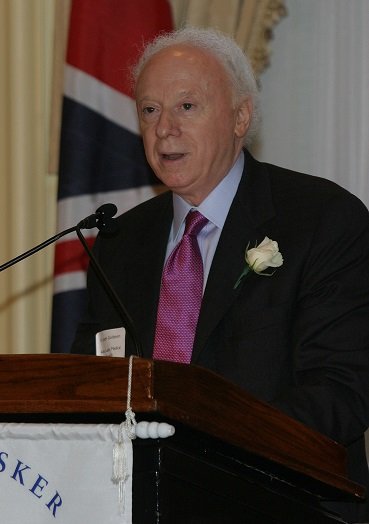 Every field of science has one big problem that defies solution. In mathematics, the great unsolved problem is the Reimann hypothesis, which attempts to describe the irregular distribution of prime numbers. In physics, the Holy Grail is The Final Theory, which is supposed to explain all the known forces of nature with a single mathematical equation. In chemistry, the grand challenge is to enhance the reactivity of the carbon-hydrogen bond so that the Earth’s vast quantities of hydrocarbons can be converted into cheap chemicals and drugs.
Biology may not have the exalted status of its three sister sciences, but its big unsolved problem may be the most challenging of all, and for sure it will be the most fun to solve. How does a single cell, the fertilized egg, give rise to a complex organism, a human being, which is made up of 250 types of cells, all having the same genetic instructions, yet each performing a different function? Red blood cells, for example, manufacture hemoglobin; pancreatic beta cells produce insulin; skin cells make keratin.
As many of you know, there is a current fascination with race horses, owing to the popular film Seabiscuit. I saw the movie and was struck by the analogy between horseracing and RNA transcription. After the RNA polymerase attaches to the promoter of a gene, it unwinds the double helix of the DNA, and then it slides along one strand of the unwound DNA like a thoroughbred horse racing around the track at Hialeah. As it gallops along the DNA, the polymerase constructs an RNA copy of the DNA. In bacteria, there is only one RNA polymerase. The same enzyme produces all three types of RNA: messenger RNA, which is the template for making proteins; ribosomal RNA, which is the machine that synthesizes the protein from amino acids; and transfer RNA, which delivers the amino acids to the ribosome.
The crucial step in bacterial gene transcription is the very first step — the binding step — in which the RNA polymerase attaches to the promoter. This binding is the only step in the entire process that can be regulated by an activator or a repressor protein. These regulators turn transcription on or off, depending on signals that the cell receives from the environment.
The conceptual framework for understanding prokaryotic transcription and its regulation was formulated over a 20-year period from 1955 to 1975, beginning with the classic studies of Jacob and Monod in bacteria. For reasons that are totally mystifying to me, Jacob and Monod never received a Lasker Award. Maybe the Francophobia that is so rampant today in the White House also afflicted the Lasker Jury 40 years ago. A more likely explanation is that the Nobel Committee jumped the gun, leaving the Lasker Jury at the starting gate. The Lasker Jury did, however, give its Basic Award in 1997 to Mark Ptashne, who worked out the detailed mechanism for gene regulation in bacteria.
Unlike bacteria, eukaryotic organisms such as humans encase their DNA in a nuclear compartment, which makes transcription in eukaryotes immensely more complex than in bacteria. As you’ll see in a moment, the eukaryotic transcriptional apparatus is a horse of a different color. There was no simple and direct path to connect the bacterial discoveries of Jacob, Monod, and Ptashne to the complex machinery of eukaryotic cells. Scientists studying eurkaryotic transcription had to make a fresh start. This start was accomplished single-handedly by this year’s recipient of the Lasker Basic Award, Robert Roeder of The Rockefeller University.
Roeder’s work in eukaryotic transcription began in 1965 when he was a graduate student with William J. Rutter at the University of Washington in Seattle. Stimulated by the Jacob-Monod paradigm, Roeder set out to identify and purify the eukaryotic version of the prokaryotic RNA polymerase. But, to his surprise, he found not one but three different RNA polymerases, each devoted to one of the three types of RNA. RNA polymerase I forms ribosomal RNA, polymerase II forms messenger RNA, and polymerase III forms transfer RNA. The three RNA polymerases are referred to by the cognoscenti as Pol I, Pol II, and Pol III. Here you see the first level of complexity in eukaryotic transcription. For a 23-year-old graduate student to discover three eukaryotic RNA polymerases all at one time is analogous to the feat of the 18-year-old jockey Steve Cauthen, who won the Kentucky Derby, the Preakness, and the Belmont in a single year — 1978.
In 1969, Roeder established his own laboratory at the Carnegie Institution in Baltimore, Maryland, and later at Washington University in St. Louis, Missouri. There, he vigorously pursued the purification of the three RNA polymerases. He found that each enzyme was not a single protein, but a large complex of eight to ten different proteins. In a dazzling display of the biochemist’s art, Roeder purified all three polymerases in their active forms. Remember, the early 1970s was the Ice Age of protein purification. It was all done in ice buckets and cold rooms. There were no His tags, Flag tags, GST-fusions, or fancy fast performance purification machines.
With pure polymerases in hand, Roeder developed, again single-handedly, the first ‘cell-free’ test-tube reactions in which eukaryotic genes were transcribed in a faithful manner outside of cells. This accomplishment in the late 1970s opened the starting gates of RNA transcription in much the same way that Arthur Kornberg had opened the gates of DNA replication by synthesizing DNA in the test tube. Roeder’s methods provided the basic system that scientists have used for all subsequent studies of gene transcription in test tubes.
Early in his studies — in 1979 — Roeder made a crucial discovery: Unlike the situation in bacteria, none of the three eukaryotic RNA polymerases by themselves were capable of properly initiating transcription. Accurate transcription ensued only when the test-tube reactions were supplemented with protein extracts derived from cells. In the case of Pol II, which produces messenger RNA, Roeder discovered six factors that are required for Pol II to initiate transcription. These six general transcription factors and the polymerase itself are known today as the ‘general transcription machinery’ because their action is required for the initiation of transcription of all protein-encoding genes in all eukaryotic organisms — from yeast to flies to humans. Each one of these six general transcription factors and Pol II itself is a multisubunit complex composed of five to eight proteins. All together, the eukaryotic general transcription machinery consists of 44 different proteins. This is in striking contrast to bacteria where only one accessory protein is needed to assist the single polymerase in initiating transcription.
One of the six general transcription factors that Roeder discovered, called TFIID, lies at the very heart of the transcription process. Despite its arcane name, TFIID has become deeply embedded in the vernacular of molecular biology and appears in all textbooks of biochemistry, cell biology, and genetics. Unlike bacterial RNA polymerase, eukaryotic Pol II does not bind to promoter regions directly. Instead, it is TFIID that binds to the promoter, and it does this by recognizing a DNA sequence called the TATA box that is found in the promoters of most eukaryotic genes. After TFIID is bound to the TATA box, it recruits the other five general transcription factors, which assemble on the DNA in an ordered fashion. Once the six general transcription factors are properly assembled, they recruit Pol II to the DNA, and transcription proceeds.
With the discovery of TFIID, the gates of transcription were now open to all. A bevy of molecular biologists, including Philip Sharp at MIT and Pierre Chambon in Strasbourg, now entered the field. They began a lively race to purify the TATA-binding subunit of the TFIID complex. At the beginning of the race, the academic bookies gave the best odds to Roeder since he had already won the Triple Crown by discovering the three polymerases. But midway in the race, the odds changed in favor of Sharp when the bookies learned that Sharp was a Kentucky-born farm boy who grew up near Churchill Downs. In the end, Sharp and his young trainer Lenny Guarente won the race. Sharp, of course, received a previous Lasker Award and Nobel Prize — not for TFIID but for the discovery of split genes. Roeder was not deterred by Sharp’s success and was champing at the bit to enter the next race. By this time, the transcription field had heated up, and eight labs took the starting line in the race to clone the gene for TFIID. The result was a dead heat. Roeder’s paper was submitted to Nature on July 19, 1989, accepted on August 30, and published on September 28. Sharp’s paper was submitted to Cell on July 20 (one day after Roeder’s), accepted four days later, and published on September 22 (six days before Roeder’s). Arnie Berk, a dark horse, submitted his paper to the PNAS on July 19 (the same day as Roeder and one day before Sharp), but his paper was not published until October. The moral of this story is: fast jockeys publish in Cell!
Soon after the TATA-binding subunit of TFIID was cloned, its three-dimensional structure was solved in 1992 by Stephen Burley at Rockefeller in collaboration with Roeder and by the late Paul Siegler at Yale. The results were stunning. The protein is shaped like a saddle that sits like a jockey astride the TATA box, inducing a sharp bend in the DNA. The protruding upper surface of the TFIID serves as a docking site for the other general transcription factors and Pol II. In its explanatory potential, the vision of TFIID straddling the TATA box is one of the most informative crystal structures ever determined.
With this beautiful structure in hand, you might think Roeder would have been content to take a victory lap and just ride high in the saddle, but I can assure you it is totally out of character for Bob to rest on his laurels — either sitting in a saddle or relaxing in his cushy endowed chair at The Rockefeller.
By now, you may feel a bit overwhelmed by the immense complexity of eukaryotic transcription, and I have not even told you about three other layers of complexity in the system. One is the 3000 transcription factors that activate or repress the general transcription machinery. These factors were originally discovered by talented scientists like Robert Tjian and Steven McKnight. A second complexity is the multiprotein co-activator complexes that link the activators and repressors to the general transcription machinery. And finally there are the nucleosomes and the chromatin remodeling complexes, revealed by Roger Kornberg and David Allis, that determine how tightly the DNA is wrapped around histones and how accessible it is to the transcription apparatus. All that complexity is for another day — and perhaps even a few more Lasker prizes.
There are two things that I hope you will remember about the eukaryotic transcription apparatus — its beauty and its complexity. The beauty, arising from the elegance of Robert Roeder’s experiments and his remarkable artistry in combining biochemistry with molecular biology. The complexity, arising from multiple layers of multiprotein complexes interacting with each other in a multitude of diverse combinations that will ultimately, when it’s all figured out, solve biology’s big mystery.
In his 35 years in science, Bob Roeder and his colleagues have purified, cloned, and characterized an astounding number of proteins — almost 300 at last count. Obviously all of them are important (at least to Bob Roeder), but the one that stands out is TFIID, the centerpiece of the general transcription machinery. As I mentioned earlier, TFIID straddles the DNA-like a saddle, bending it so that Pol II can gallop along the unwound DNA to make RNA — much like a thoroughbred races along the track at Saratoga.
The resemblance of Pol II to a thoroughbred is reminiscent of William Faulkner’s classic article on horse racing in which he wrote that nothing affects the emotional nature of man as much as the thoroughbred race horse. According to Faulkner, and I quote: “Horse racing is not just betting. It is a sublimation, a transference: man, with his admiration for speed, strength, and physical power far beyond what he himself is capable of, projects his own desire for physical supremacy, victory, onto the agent — the baseball team, the football team, or the prize fighter. Only the horse race is more universal because the brutality of the prize fight is absent, as is the long time needed in baseball and football for the orgasm of victory to occur, whereas in the horse race it is a matter of minutes, never over two or three, repeated six or eight or ten times in one afternoon.”
If ever there were an “orgasm of victory,” it is Bob Roeder’s test-tube system for gene transcription. Bob tells me that his test-tube system can transcribe any gene in a matter of minutes, never over two or three, and he can repeat it six or eight or ten times every afternoon! If Bob Roeder were a racehorse, his name would be Transcribed.
Acceptance remarks by Robert Roeder
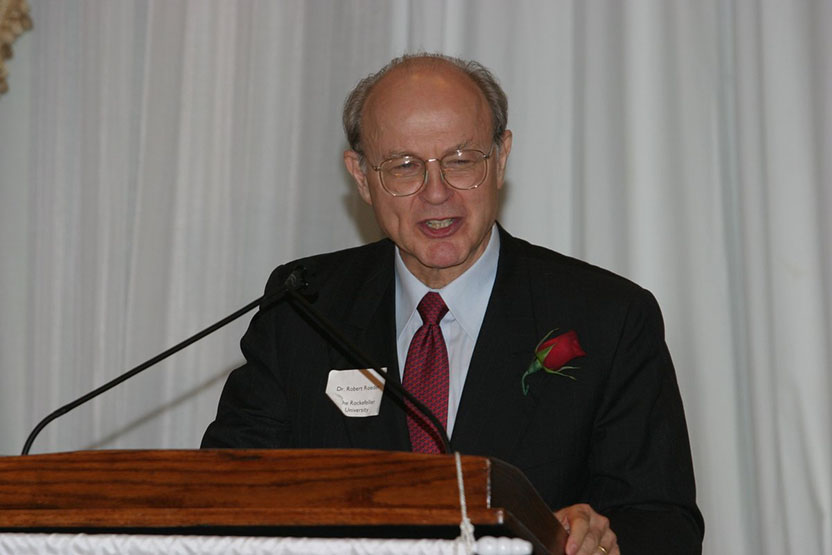
Acceptance remarks, 2003 Lasker Awards Ceremony
It is with utmost gratitude to the Lasker Foundation, and its distinguished jury, that I humbly accept this most prestigious award. Having devoted over 35 years of my life to an understanding of a fundamental problem in gene control — and with a sustained belief in its ultimate relevance to broad areas of physiology — it is remarkably satisfying to have this view substantiated by an organization that plays such a pivotal role in promoting public awareness of the nature and importance of biomedical research.
This singular award is all the more meaningful because it comes at a time when there have been so many exciting developments not only in the transcription field, but in other important areas as well. What the award reemphasizes to me is the value and reward of picking an important new problem, even if risky, and pursuing it with confidence, diligence and rigor. My own success, of course, has benefited from many remarkable (and carefully chosen) individuals and institutions.
I also acknowledge, with great pride and gratitude, the remarkable dedication and contributions of my many students and postdoctoral fellows, who responded so effectively to the challenges set before them and, in many cases, exercised the freedom to go beyond. This award is equally a recognition of their activities, and, I hope, will serve to further inspire them to avidly pursue their own dreams and aspirations as independent scientists.
Finally, and most importantly, I thank my family for their love and support, as well as their understanding and patience, as I pursued my passion for science. Although my parents have not been witness to my success, and indeed had strongly advocated a continued life of hard work on our Indiana farm rather than the pursuit of higher education, this success has depended heavily on values I learned from them.
