

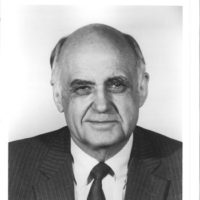
Albert Lasker
Public Service Award

Award Description

Maurice Hilleman
For discovering the causes of certain viral diseases and for pioneering breakthroughs in vaccine development, especially hepatitis B vaccine development throughout the world.

Maurice R. Hilleman has created effective vaccines which have saved millions of people from illness and death from viral, rickettsial, and bacterial infections.

Dr. Hilleman's career in science has been dedicated to putting the power of basic science at the service of preventive medicine, consistently linking the laboratory, the clinic and the scientific resources of the pharmaceutical community.

Dr. Hilleman and his team developed the first live vaccines against measles, mumps, and rubella, and then produced the combined measles-mumps-rubella (MMR) live virus vaccine now used routinely, worldwide, to immunize children with a single injection. He prepared the first purified poliomyelitis vaccine and the first vaccines against chicken pox, bacterial pneumonias, and meningitis.

Dr. Hilleman also participated in the discovery of many viruses, including the adenoviruses that cause severe respiratory infections, the rhinoviruses which cause the common cold, and the oncogenic SV40 virus. He performed the first substantial purification and definition of interferon, and discovered that it is induced by double-stranded RNA.

His crowning achievement has been the vaccine against the hepatitis B virus. Because hepatitis B plays an important role in cancer of the liver, the hepatitis B vaccine developed by Dr. Hilleman holds hope that it may be the first anti liver-cancer vaccine.

To Dr. Hilleman, for discovering the causes of certain viral disease, and for pioneering breakthroughs in vaccine development for the benefit of mankind, this 1983 Albert Lasker Public Service Award is given.

Saul Krugman
For his persistent leadership in conceiving, developing and testing vaccines against various viral diseases, especially hepatitis B, with vast impact on world health.

For his critically important studies of hepatitis, rubella and measles, culminating in the development of the hepatitis B vaccine.

In the early 1950s, Dr. Krugman and his associates set out to combat infectious diseases in children. In 1960, he showed that children could be protected against measles by using live attenuated virus vaccine. In 1969, he confirmed the effectiveness of the first vaccine against rubella.

Rubella, which formerly caused brain damage and severe physical disabilities among tens of thousands of babies born to women who contracted the disease while pregnant, is now virtually unknown in the U.S. Today, measles is a medical rarity in the U.S., where 95 percent of our children are vaccinated against it.

Dr. Krugman's most far-reaching achievement concerns viral hepatitis. In a long and elegant sequence of studies beginning in the mid-1950s, he proved that "infectious" (type A) hepatitis, transmitted by the fecal-oral route, and the more serious "serum" (type B) hepatitis, transmitted by blood, body secretions, and sexual contact, were caused by two immunologically distinct viruses.

Dr. Krugman also discovered that heat-treated serum from a chronic carrier of hepatitis B could elicit protective antibodies in a susceptible person without causing the disease. This brilliantly simple discovery paved the way for the development of various hepatitis B vaccines now licensed for worldwide use. Over 300 million people throughout the world are chronic carriers of hepatitis B and, as a consequence, can themselves develop cancer of the liver and other dangerous illnesses.

To Dr. Krugman, for his courageous leadership in conceiving, developing, and testing vaccines against various viral diseases, especially hepatitis B, with vast impact on world health, this 1983 Albert Lasker Public Service Award is given.